
Immune functions of neuroglia
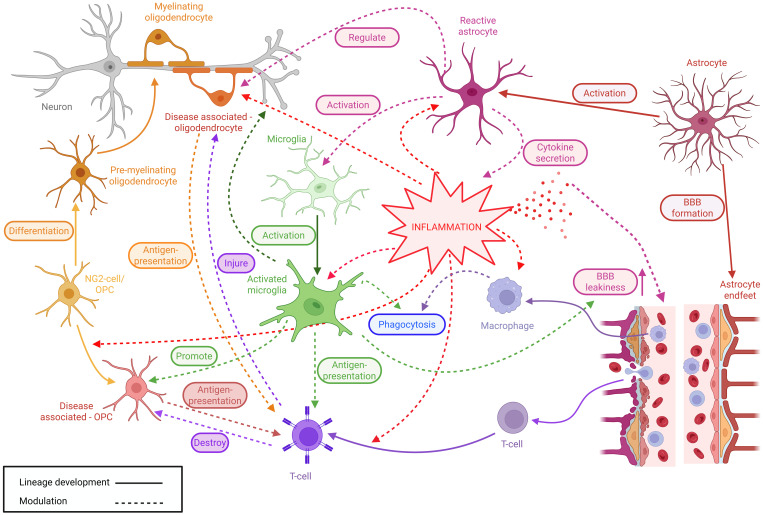 Neuroglial cells are pivotal regulators of innate and adaptive immune processes within the brain and spinal cord. Neuroglia, comprising microglia, astrocytes, oligodendrocytes, oligodendrocyte precursor cells (OPCs), and ependymal cells orchestrate a complex network of immune surveillance, signaling, and blood–brain barrier maintenance, thereby controlling immune cell entry (Figure 1). Microglia function as the resident macrophage-like cells of the central nervous system (CNS) with numerous physiological functions. Microglia continuously monitor the neural environment and rapidly respond to injury, infection, and perturbations in homeostasis, with changes in process motility, polarization, directed process movement, morphology, and gene expression profiles. Microglia are also fundamental to the regulation of neural cell proliferation, phagocytosis, synaptic pruning and the release of signaling molecules or pro- and anti-inflammatory mediators (1, 2).