 Throughout the lifespan, microglia, the primary innate immune cells of the brain, fulfill a plethora of homeostatic as well as active immune defense functions, and their aging-induced dysfunctionality is now considered as a key trigger of aging-related brain disorders. Recent evidence suggests that both organism’s sex and age critically impact the functional state of microglia but in vivo determinants of such state(s) remain unclear.
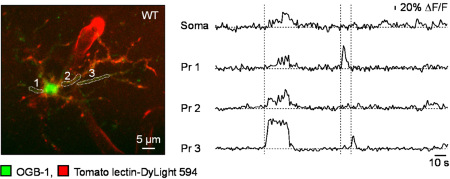
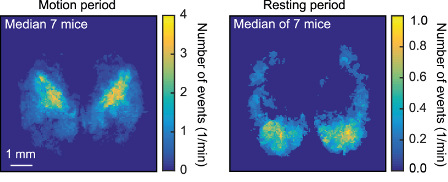
Therefore, we analyzed in vivo the sex-specific functional states of microglia in young adult, middle aged and old wild type mice by means of multicolor two-photon imaging, using the microglial Ca2 + signaling and directed process motility as main readouts.
read more: https://www.frontiersin.org/articles/10.3389/fimmu.2020.00750/full

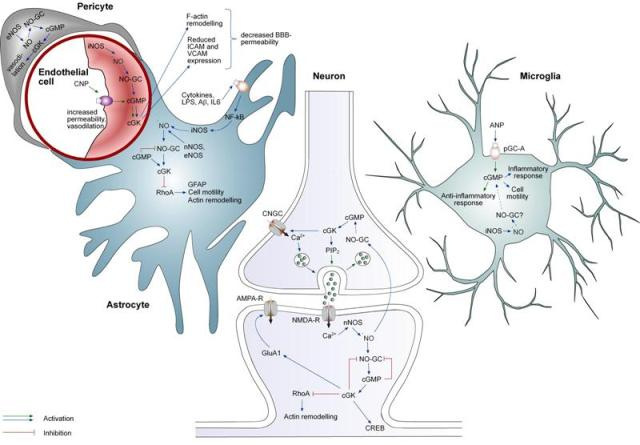 Cyclic guanosine monophosphate (cGMP) is a ubiquitous second messenger and a key molecule in many important signaling cascades in the body and brain, including phototransduction, olfaction, vasodilation, and functional hyperemia. Additionally, cGMP is involved in long-term potentiation (LTP), a cellular correlate of learning and memory, and recent studies have identified the cGMP-increasing drug Sildenafil as a potential risk modifier in Alzheimer’s disease (AD). AD development is accompanied by a net increase in the expression of nitric oxide (NO) synthases but a decreased activity of soluble guanylate cyclases, so the exact sign and extent of AD-mediated imbalance remain unclear.